In buone mani (iFec Lab)
In buone mani (IFec Lab) is a narrative game developed for the training of healthcare professionals, particularly nurses, focusing on home-based care. It is an interactive gaming experience that prioritizes the quality of the care relationship and attentive observation, helping players better understand the personal and family context of the patient.
The game was developed by Whitesock and the Università del Piemonte Orientale, following funding received from the Age-It project – “Ageing well in an ageing society” (PE0000015), funded by the European Union – Next Generation EU. The game is available on desktop (Steam) and mobile platforms (Play Store, App Store).
Challenge
The main challenge lies in transforming the training of healthcare professionals from a theoretical approach into a reflective and immersive experience. While traditional training methods—such as lectures, case studies, and controlled role-plays—offer useful tools, they often struggle to fully capture the emotional and relational complexity of real-world situations. Engagement can remain partially passive: one listens and observes, but does not always have the opportunity to “live” the experience directly.
The game allows for a deeper exploration of aspects related to the care relationship, such as attention to detail, interpreting the individual’s living environment, and understanding needs that are not always explicitly stated. In this context, the project also focused on transforming a storyboard and a functioning WebGL prototype into a more structured and professional product, designed for distribution on app stores and for use both independently and within academic courses.
Our Solution
The solution was to transform the care situation into an exploratory narrative where the nursing professional discovers the person through observation and listening.
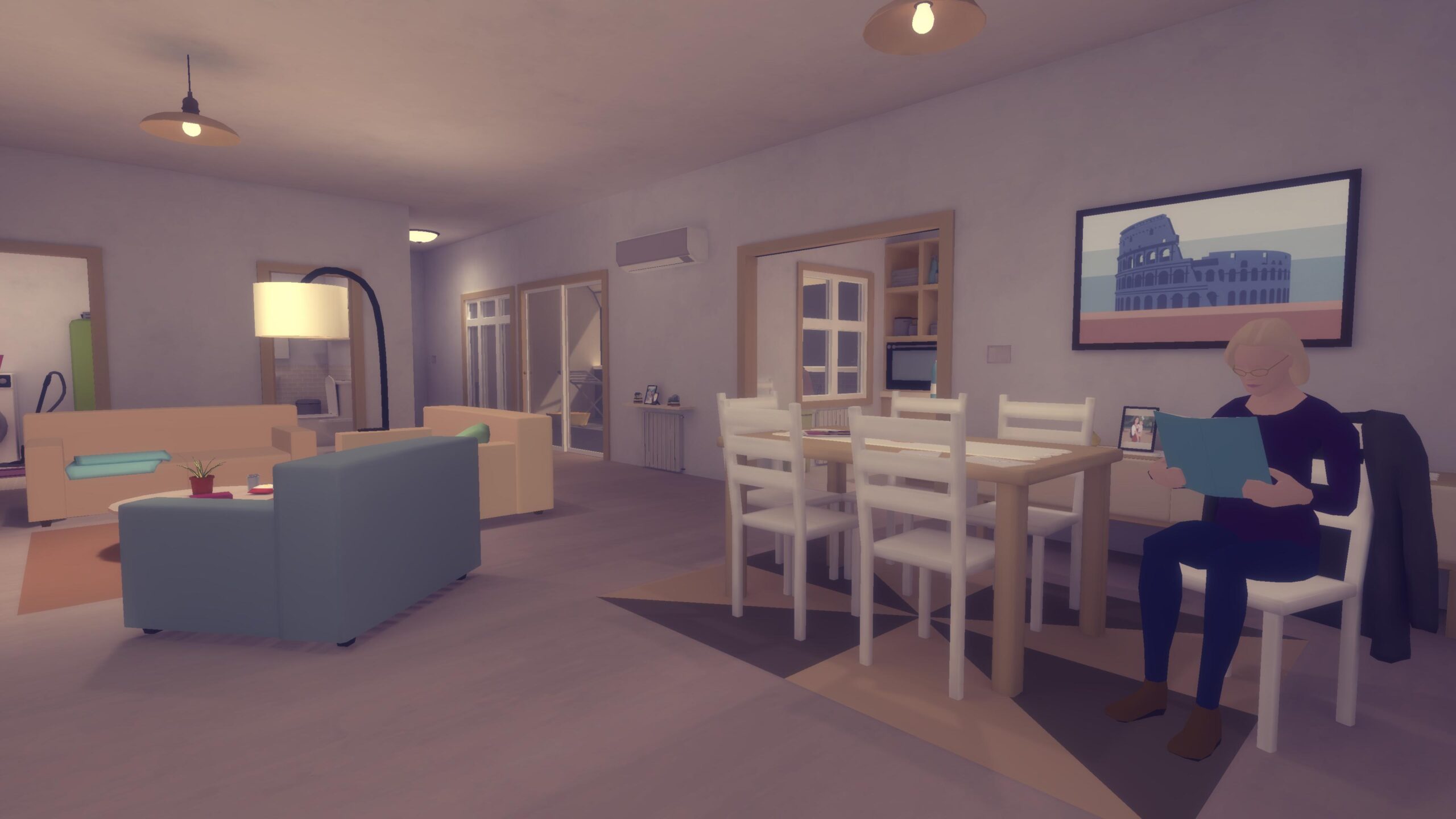
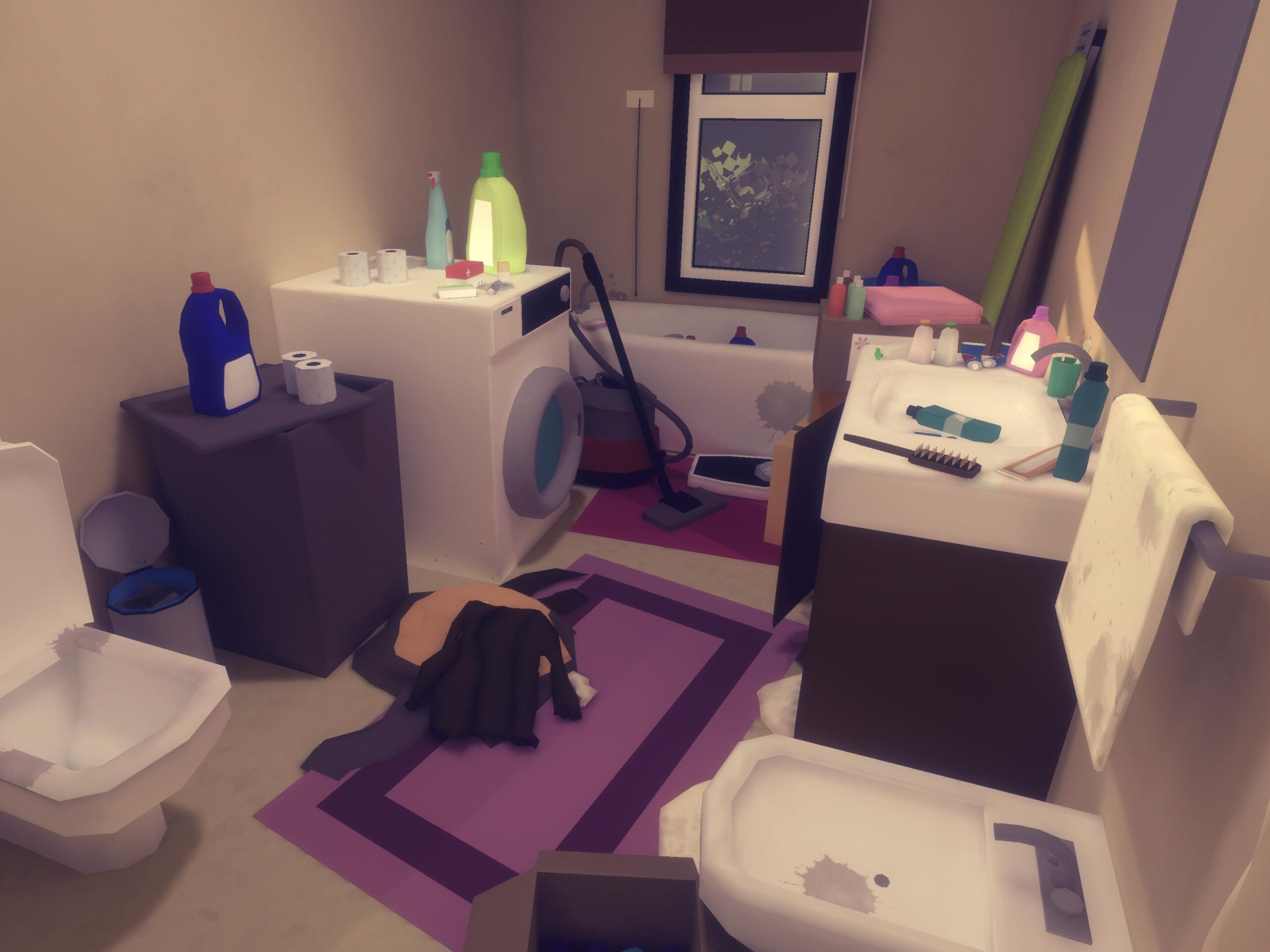
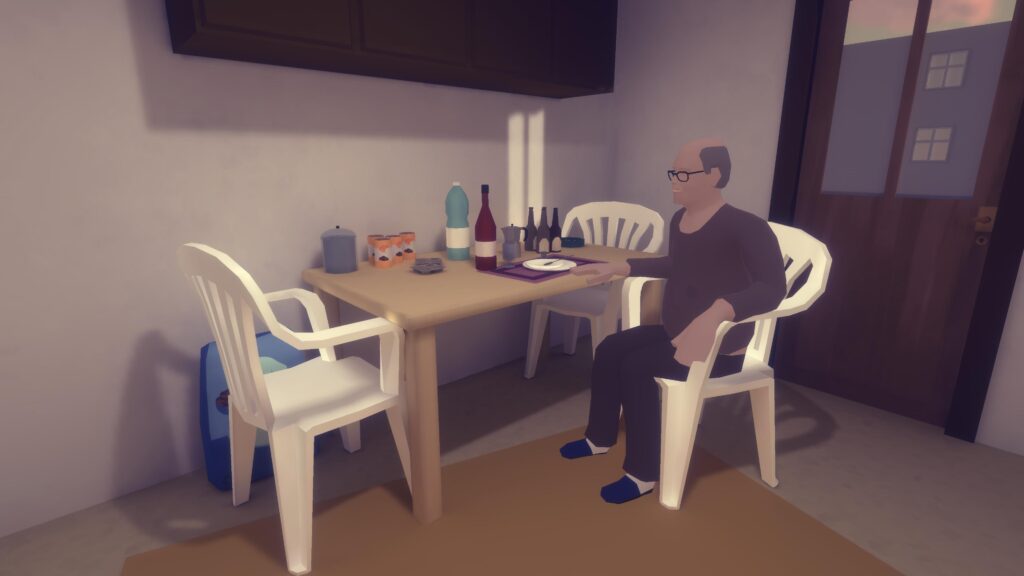
The game unfolds across five daily-life scenarios, each centered on individuals with specific needs and diverse family backgrounds. In every scenario, the player is placed within a domestic space rich in detail: photographs that tell stories, objects revealing interests and fears, and subtle cues suggesting the underlying need behind an explicit request.
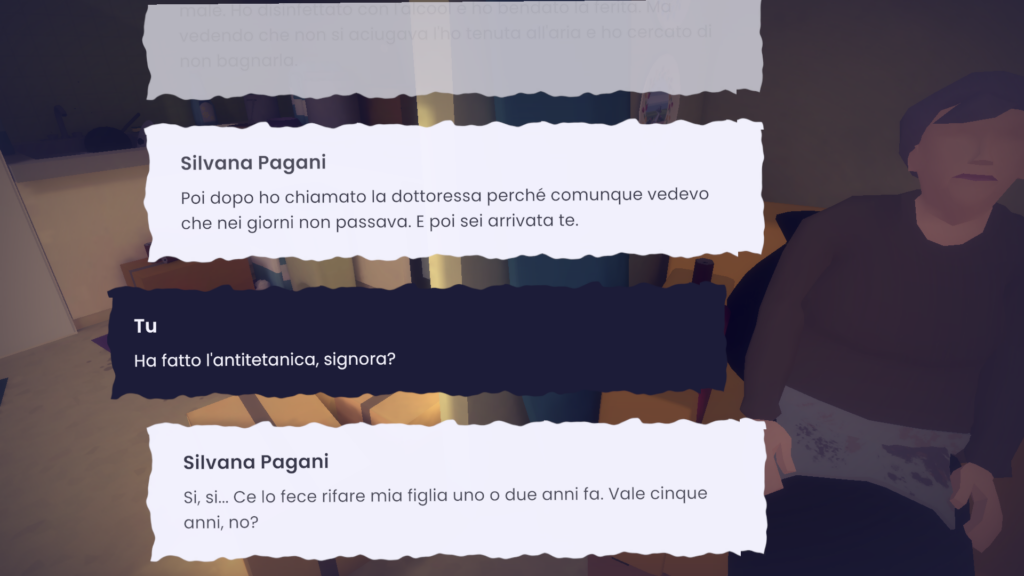
Narratively, the game encourages spatial exploration and attentive listening during dialogues. This is not a forced linear sequence: the player is invited to notice and get to know the person before taking action. Scenarios contain information that is either evident or hidden within details and casual conversations. The player chooses freely what to observe, which topics to discuss, and with whom to interact.
In terms of mechanics, the conflict emerges from the balance between procedure and the person: knowing what to do (the clinical protocol) is already established, but the game challenges the player to understand how to do it within the specific context of that individual, that history, and that moment. Without an understanding of the context, even the correct procedure may prove ineffective.
Aesthetically, the graphics move away from realism in favor of a suggestive and intimate style, which amplifies the emotional experience without causing distraction. The sound design further reinforces the immersion into the patient’s home environment.
Impact
In buone mani (IFeC Lab)aims to transform healthcare training paradigms by introducing ludic and narrative languages into traditionally theoretical learning environments. The immersive experience allows participants to develop awareness of aspects that are difficult to convey in a classroom setting: observational skills, active listening, and the ability to interpret the patient’s personal context.
The post-game debriefing becomes a moment of collective reflection, naturally highlighting what players noticed, what they prioritized, and how they interpreted various cues. This shifts the applied game from a tool for independent training to a catalyst for group educational dialogue.
Thanks to the integrated tracking platform, organizations and trainers can collect data on how participants navigate the various scenarios. This data paves the way for future impact studies capable of quantifying improvements in observational capacity and relational awareness..
Gameplay
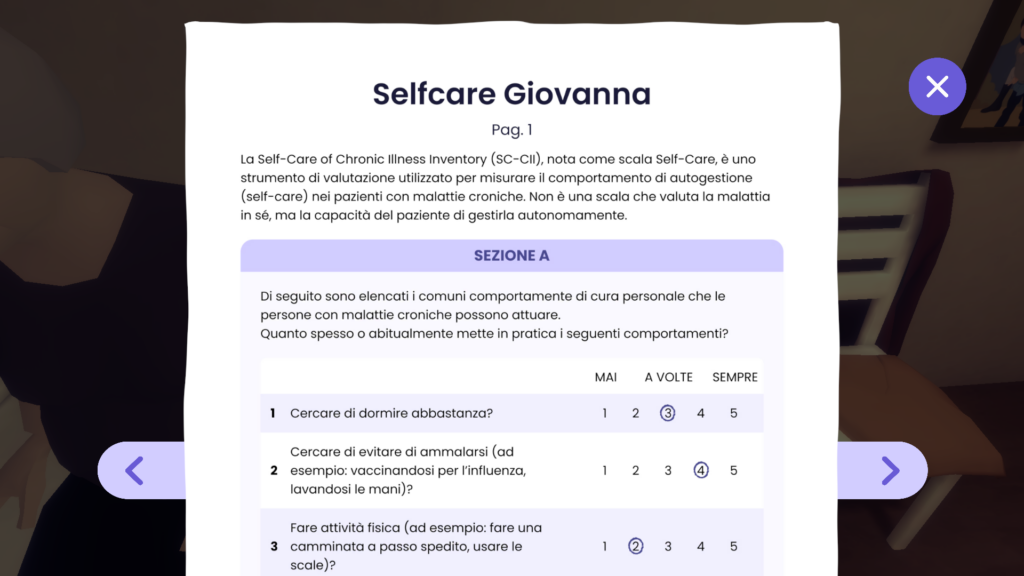
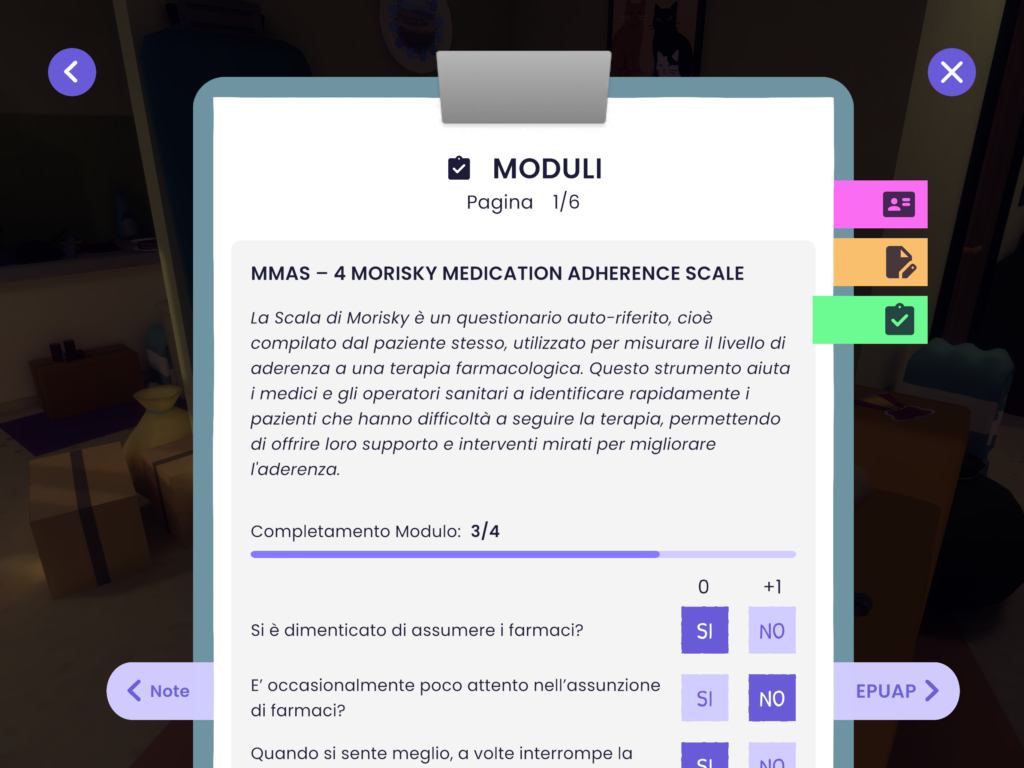
The gameplay flow includes: selecting one of five scenarios, meeting the individual to be cared for (each with a specific name, history, fears, and desires), free navigation of the domestic space via hotspots that reveal details about the person’s life, dialogues that provide information, the completion of assessment tools, and finally, making concrete care decisions.
The outcome of a scenario depends on how well the player has understood and considered the individual’s context and needs, as well as the execution of a careful care plan.
About In Buone Mani

Antonio Scalogna
Simulation Technology Specialist – SIMNOVA
I had the pleasure of working and collaborating with them! Besides being truly competent, they’re also fantastic human beings!