Crankahoy!
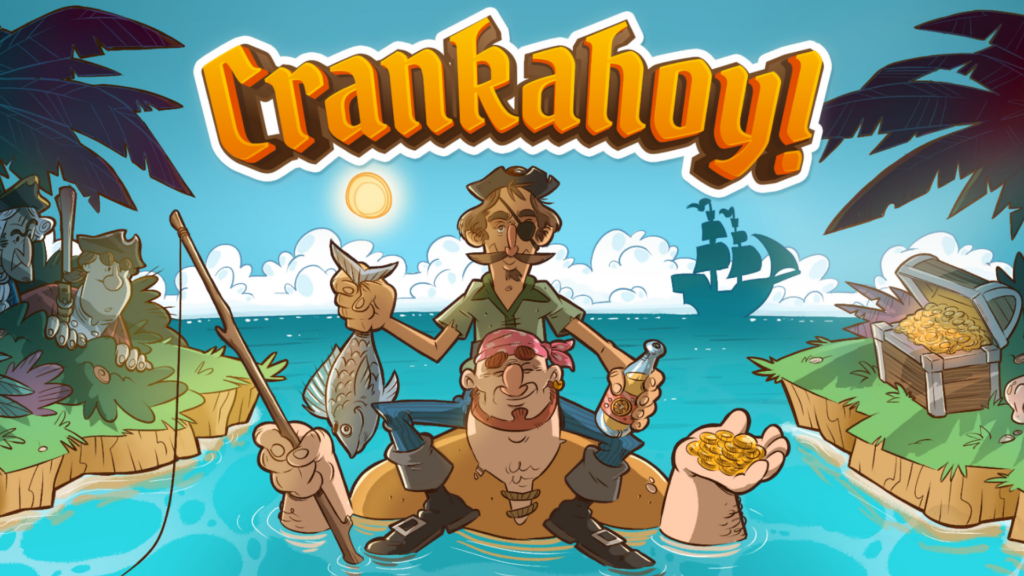
Crankahoy! is a project commissioned by the Istituto Italiano di Tecnologia (IIT) with the goal of creating a fully inclusive video game that fosters collaboration between sighted, visually impaired, and blind players. The title utilizes a proprietary haptic lever developed by IIT as its primary interface, capable of providing advanced tactile feedback.
The Challenge
The main challenge was to explore how haptic feedback could become a tool for inclusive game design based on cooperation between two asymmetric roles. It wasn’t just about integrating the capabilities of the IIT-developed controllers, but about creating an experience where one player (sighted) and the other (visually impaired or blind) could collaborate: the former relying on the monitor and the latter on sound and tactile feedback.
The design challenge was conceptual: which game dynamics can make touch and hearing as intuitive and precise as sight? How can an interaction be created where the different forms of sensory input from both players have equivalent value for the success of the mission? Furthermore, the context of use, a public event, required this form of inclusivity to be immediate: an experience capable of communicating the richness of multi-sensory collaboration in just a few minutes, without the need for long tutorials.
Our Solution
The solution was to design an experience where haptic feedback is not an accessory, but the core mechanic that enables collaboration between the two roles. Instead of adapting traditional gameplay, we started from the principle of native inclusivity: creating situations where touch and hearing are the primary sources of information, allowing the non-sighted player to lead the action or provide essential data to their sighted partner.
Picking a lock, fishing, rowing: in these real-world contexts, tactile feedback communicates crucial information that sight alone cannot capture. By transposing these situations into the game, haptic feedback becomes the natural language of this asymmetric interaction, making the two players indispensable to one another. The pirate setting unifies the three mini-games into a coherent ludic context, maintaining the focus on synergy between participants and the effectiveness of a design born to be accessible to all.
Project Impact
Crankahoy! represents a significant exploration of haptic feedback’s potential in mainstream gaming. The project demonstrates that touch can be a central and engaging game mechanic, not a mere enhancement, and that design can leverage haptic feedback in intuitive and satisfying ways. From a technical standpoint, the three mini-games test different models of haptic interaction: precision (click and rotation), shared resistance (force coordination), and physical rhythm (repeated and controlled movement).
The collaborative and asymmetric structure also opens up space for reflection on how inclusive gaming should not mean “simplifying” for accessibility, but rather reimagining game design from different perspectives, creating experiences that potentially benefit all players.
Gameplay
Crankahoy! is a collection of three mini-games: Lockpickers, Yohook, and Rowaway. Each mini-game lasts approximately 5 minutes and uses tactile feedback as the primary gameplay mechanic. The flow is immediate: players select a mini-game, learn their specific roles through direct interaction, and begin playing.
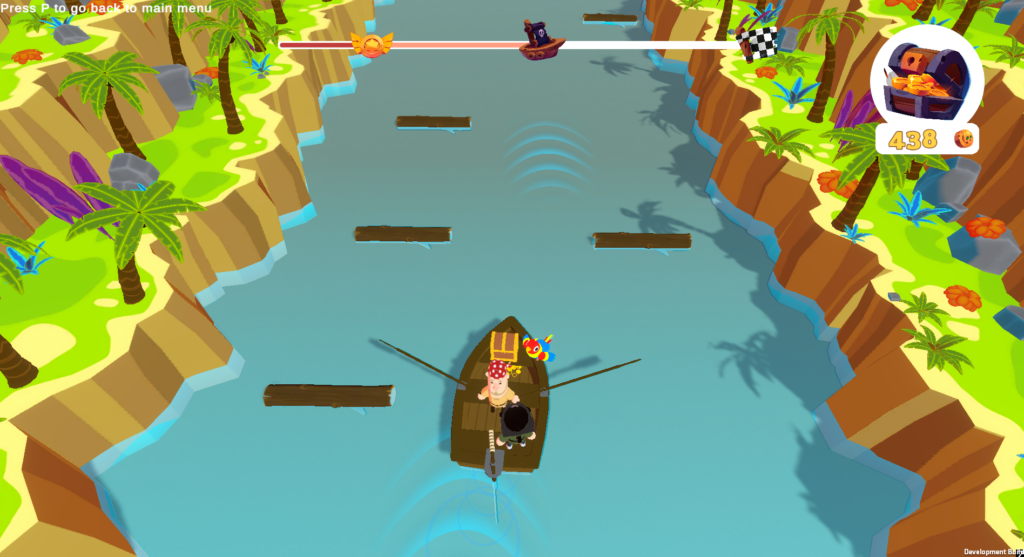
Rowaway: Players row a raft, sensing the optimal rowing rhythm and the resistance of obstacles in the river through haptic feedback. Higher speed means less fatigue but greater difficulty in steering. The non-sighted player feels the rhythm, while the sighted player navigates around obstacles. Both must find a physical and communicative balance.
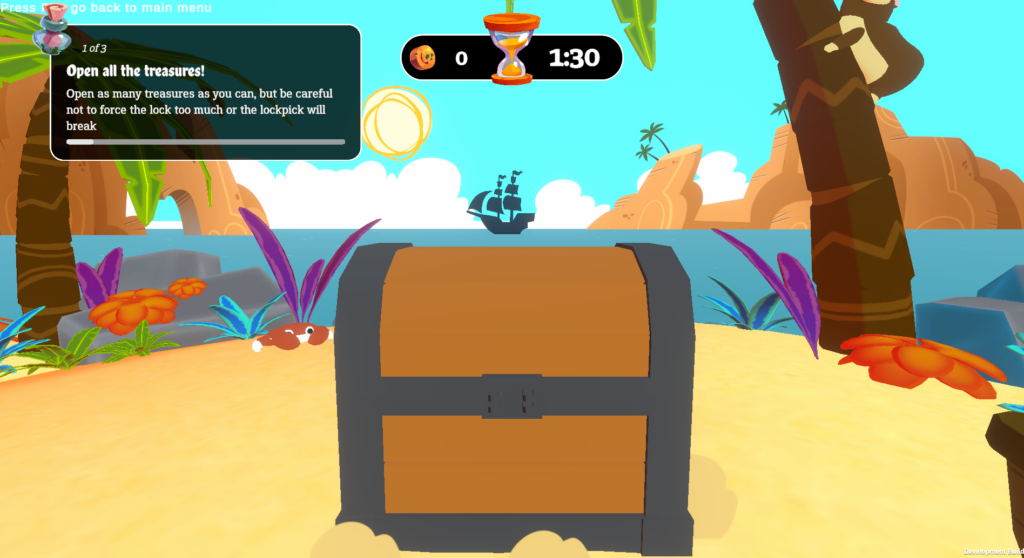
Lockpickers: The non-sighted player inserts the pick at the right angle, feeling a “click” when the cylinder is correctly rotated. The sighted player rotates the cylinder and sees a visual quiver when the pick is aligned. The two must communicate and coordinate to align the components before the pick breaks.
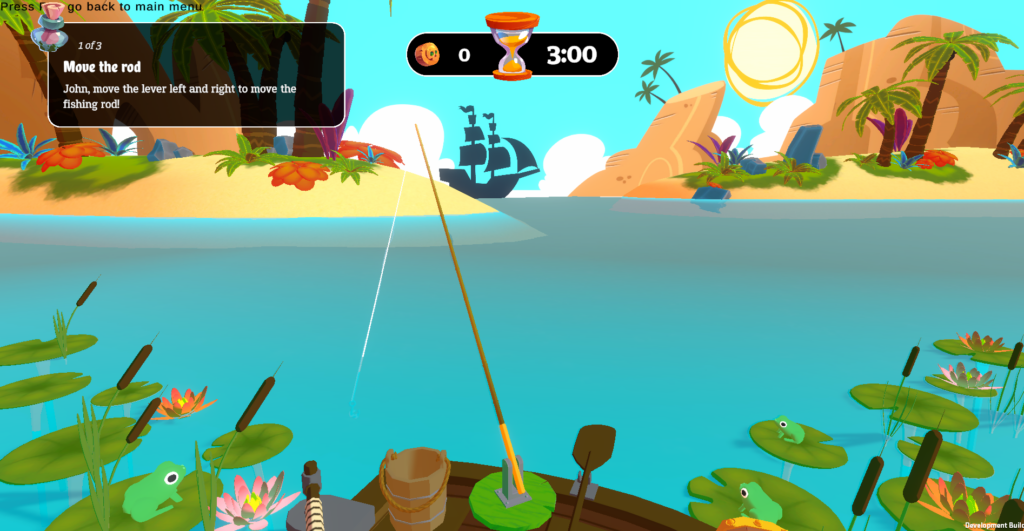
Yohook: Both players share control of a fishing rod and must coordinate to tire out the fish without snapping the line. The non-sighted player feels the fish’s pull through the lever’s resistance and must rotate to exhaust it. The sighted player watches the fish and decides when to pull.
About Crankahoy!

Marco Crepaldi
Head of Electronic Design Laboratory – IIT
We’ve been working with Whitesock for an interesting research project involving custom video
game development integrated with haptics hardware we have developed.
It has been a very nice discovery because I have never worked with them in the past.
They have been very responsible and very open to meet stringent research specifications and timing.
Honestly, I have been very satisfied with the work of whitesock, that I recommend to others.
If I could, and there would be possibility in the future I would definitely consider them again
to entrust games development jobs.
It is a small company with all the flexibility required to meet challenging research requirements,
and the staff has been very collaborative and responsive in the interfacing with hardware
specifications and constraints.It is a small company with all the flexibility required to meet challenging research requirements,
and the staff has been very collaborative and responsive in the interfacing with hardware
specifications and constraints.
